Just interesting notes and pictures from our travels.

Saturday, November 30, 2013

Nara deer/Олени в парке Нара

Nara was a capital of Japan long time ago. It has many shrines and parks. One of the parks has many deer living in it. A couple of years ago there were special stations in the park where people could buy food for deer, now that is no longer the case. Many of the deer don't mind when people take their pictures.

Город Нара когда-то был столицей Японии. В нем много храмов, и парков. В одном из парков живут дикие олени. Раньше их можно было кормить, а сейчас автоматы, продающие специальную еду для оленей, убрали. Большинство оленей не возражают, когда их фотографируют.


And some are shy.

А некоторые олени стесняются.

Sunday, November 10, 2013

Kyoto train station/Вокзал в Киото

Kyoto train station is criticized by some people because it made in futuristic style. Here is what it looks like on the inside:

Вокзал в Киото подвергается критике некоторых жителей Японии, потому что он выполнен в футуристическом стиле. Вот как это выглядит:


Thursday, October 31, 2013

Random picture/Случайная фотография

Some boy's dream came true, now he is driving trains for a living.

Сбылась мечта пацана, теперь он водит поезда каждый день.


Wednesday, October 30, 2013

Coming back to Roppongi Hills/Возвращаясь на Роппонги Хиллс

Roppongi Hills is a skyscraper in Tokyo that provides a beautiful view of the city. Sometimes, however, the visitors are just as interesting as the view from the window.

Роппонги Хиллс это небоскреб в Токио со смотровой площадкой. Но, помимо вида из окна, на башне бывают и интересные посетители.


Wednesday, September 18, 2013

Golden Pavilion Kinkaku-ji/Золотой павильон Кинкаку-дзи

Golden Pavilion Kinkaku-ji is a world-famous place located in Kyoto. It is a Zen Buddhist temple with a garden complex around it. It is called the Golden Temple because the two top stories  are covered with pure gold leaf.

Золотой павильон Кинкаку-дзи это всемирно известное место, расположенное в Киото. Это Дзэн Буддистский храм с садом. Он называется Золотым Храмом потому, что верхние два этажа из трех облицованы листами из чистого золота.

The first record of Kinkaku-ji is dated 1397. The building located here now, however, was built in 1955, after the previous building completely burned down in 1950.

Первая историческая запись о Кинкаку-дзи датируется 1397-м годом. То здание, что находится здесь сейчас, было построено в 1955-м году, после того как стоявшая тут постройка сгорела дотла в 1950-м.


This is a very beautiful, peaceful and tranquil place. The garden starts after the pavilion.

Здесь везде очень красиво, тихо, умиротворенно. После павильона посетители углубляются в сад.
A great Japanese garden always has a waterfall.

Какой же японский сад без водопада?

This garden is very special: it has a round lake with a round island in the middle. There is a small pagoda in the middle of the island and there is a small bridge that leads to it from the big land.

Этот сад в своем роде выдающийся. В нем есть круглое озеро с круглым островом посередине озера. На остров ведет тропинка, и на нем стоит небольшая пагода.

After meditation on the lake, a cup of tea from the tea house feels especially pleasant.

После медитации на озере, чашечка чая в чайном доме кажется особенно вкусной.

And, finally, a souvenir store. There is also a place to pray, and a place to get a fortune (omikuji).

В конце экскурсии храм, где можно помолиться, вытащить предсказание на будущее (омикудзи), и магазин сувениров.


Wednesday, August 28, 2013

Local trains/Пригородные поезда

Local trains is an important means of transportation in Japan. People use these trains to go to work to other towns. Schoolchildren use such trains to go to school every day, and during the times of holidays it is sometimes difficult to even enter such a train.

Пригородные поезда имеют большое значение для транспортной инфраструктуры Японии. Люди ездят на работу в соседние города. Школьники ездят на учебу, а уж во времена местных праздников бывает столько пассажиров, что очень сложно даже войти.


The train is not large, and it is managed only by one driver.
 
Поезд совсем небольшой, всего несколько вагонов и управляется одним вагоновожатым.
 
 
Every train driver parks the train on the station such that its doors match the markings on the platform.

Каждый вагоновожатый останавливает поезд так, чтобы двери поезда совпадали с отметками на станции.


Despite the small size, trains usually go as fast as 110 km/h (almost 70 mph).

Несмотря на маленький размер, поезда легко развивают скорость до 110 километров в час.


The trains are quite comfortable.

Внутри поезда комфортно, светло и тепло.


Wednesday, July 3, 2013

Waiting to get on the train/В ожидании поезда

The train is here, but it is being cleaned. In a minute or so the doors will open and the people will get on. This train, Hayabusa E-5, is one of the newest trains in Japan, and it is servicing the Eastern part of Japan, and it goes from Tokyo all the way up to Aomori and back. There are several trains a day, and most of them are full every time.

Поезд на перроне, но его пока убирают. Через несколько минут откроются двери и люди рассядутся согласно купленным билетам. Этот поезд, Е-5 Хаябуса, на сегодняшний день является одной из новейших модификаций, обслуживает восточную часть Японии, и идет от Токио аж до самого Аомори и обратно. В день туда-сюда ходят несколько поездов, и практически все поезда заполнены.

Sunday, June 30, 2013

It happens/И такое бывает

Shinkansen train system, Japanese bullet trains, are famous for their punctuality. The average variation time between the actual and scheduled arrival times is usually not more than forty seconds, for 200-400 miles of travel. But this time, the weather made the train stop in place for almost an hour. The winds of up to 30 meters per second made travel unsafe, so the train had to wait until the winds calmed down. Note for the future: if the train is significantly late, passengers may ask for compensation. Whether they get it or not, is a different story, but they can always ask.

Синкансэны (японские быстрые поезда) знамениты своей пунктуальностью. Средняя величина опоздания/прибытия раньше времени колеблется в пределах сорока секунд. И это на расстоянии в 300-600 километров! Но в этот раз, погода заставила поезд полностью остановиться почти на час. Ветер до 30-ти метров в секунду гнул сосны, и сделал передвижение на поезде на высокой скорости небезопасным. Пришлось ждать почти час, пока ветер немного успокоится. Кстати. заметка себе на будущее: если поезд значительно опоздал, можно пойти в кассу и попросить чтоб вернули деньги за билет. Вернут или нет, это другой вопрос, но попросить всегда можно.


Thursday, June 27, 2013

We are not stopping here/Эй прибавь-ка ходу, машинист!

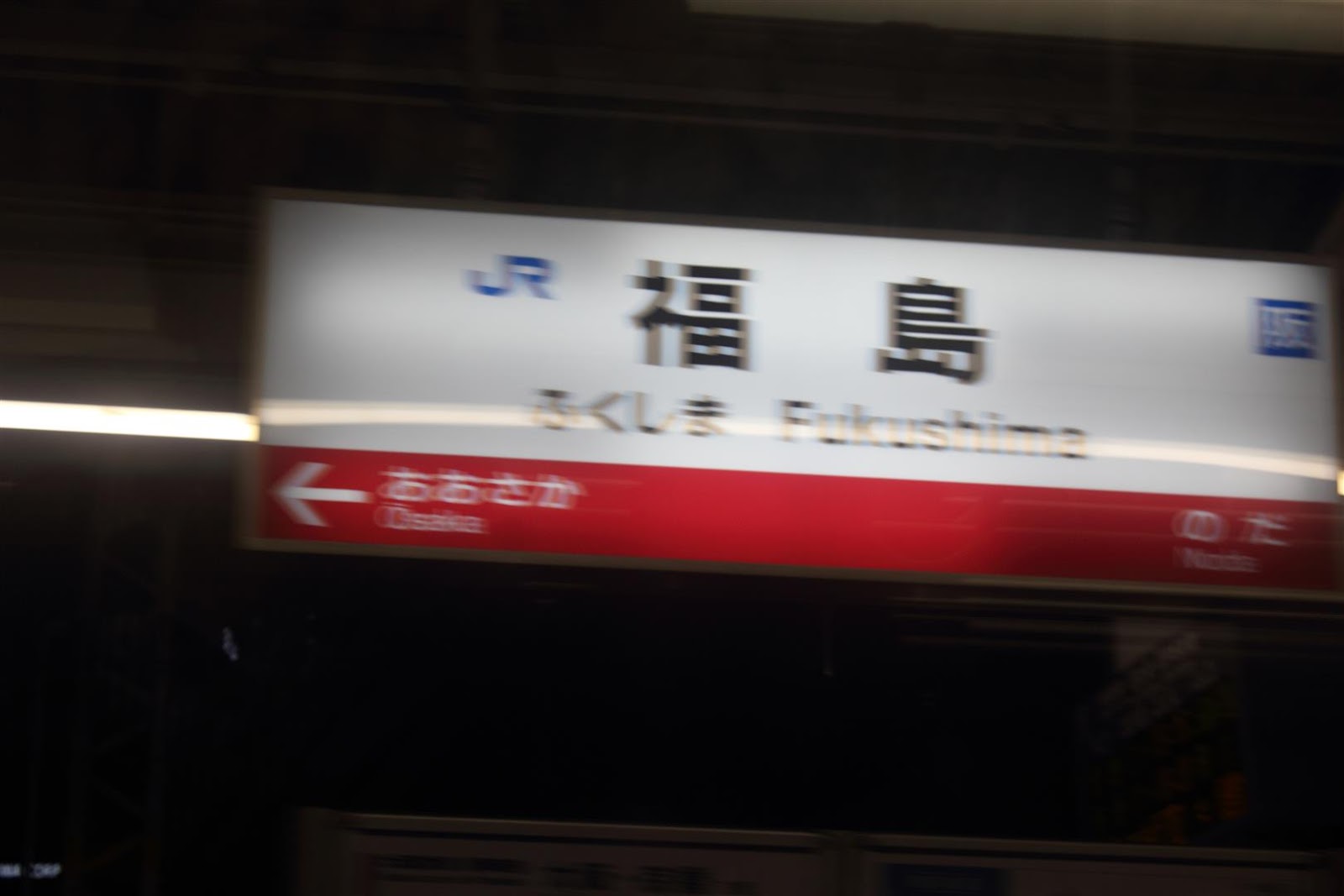
We are not stopping at the Fukushima station, let's keep going!
 
На станции Фукусима нам не надо останавливаться, поехали дальше!


In reality, this is a different Fukushima station. I already mentioned before that in Japanese you can spell the same word with different characters. This particular Fukushima station is in the city of Osaka.

На самом деле, это не префектура Фукусима, которая пострадала от ядерного загрязнения. Я уже писал ранее о том, что в японском языке много слов, которые звучат одинаково, но имеют разный смысл. Так и здесь, эта станция Фукусима находится возле города Осака.

Blog Archive

Labels

address (1) administrivia (2) agriculture (2) alaska (2) alcohol (1) aomori (6) aomori nebuta festival 2010 (1) aomori nebuta festival 2011 (1) aomori nebuta festival 2012 (2) apples (2) aquarium (1) architecture (18) art (2) Asakusa (1) atomium (1) beach (2) belgium (10) bonsai (1) books (1) brussels (7) busena (2) canada (5) cape ooma (1) castle (8) cologne (1) coolstuff (2) cost ownership of a vehicle in Japan (3) costco (1) crosswalk (1) cruise (1) culture (2) currency (1) day (1) dessert (4) details (6) display (1) driving (7) dusseldorf (1) earthquake (8) england (9) entertainment (2) europe (75) fair (1) fall (1) fans (1) ferry (1) festival (7) fireworks (1) fish (3) florence (1) flowers (1) food (47) France (7) fruit (1) fun (2) game (1) garden (2) germany (40) ginza (1) Goshogawara (2) Goshogawara Tachi Neputa Festival 2012 (1) gothenburg (1) groceries (1) gyokusendo caves (1) Hachinohe (1) Hachinohe Big Celebration of Three Shrines 2011 (1) Hachinohe Sansha Taisai (1) hakodate (9) hakodate train day 2010 (1) halloween (2) hirosaki (8) Hirosaki Chrysantemium Festival 2011 (1) hirosaki sakura festival spring 2011 (7) hokkaido (8) holiday (8) hotel (1) house (2) inakadate tanbo art 2012 (1) italy (7) japan (246) japanese (1) joke (3) karaoke (1) kokeshi (2) kyoto (2) Lake Towada (2) Lake Towada 2012 fireworks festival (1) landmark (8) landscape (1) language (1) law (5) london (10) luxembourg (2) mall (1) moscow (1) Mount Fear (2) Mount Osore (2) music (1) nara (1) national park (1) nature (5) nebuta festival (6) netherlands (1) new year (1) night (1) north america (7) observation (3) oirase gorge (2) okinawa (19) only in japan (7) open school (1) osaka (2) osaka castle (1) Osorezan (1) Paris (6) park (1) parking (1) picture puzzle (4) pineapple park (1) pisa (1) pizza (1) police (1) post office (1) railroad (2) rain (1) restaurant (8) river (1) road signs (3) roads (13) rome (4) rumor (4) russia (1) sakura (6) samurai (2) school (4) school system (2) seasonal (2) seattle (1) sendai (1) shinto shrine (1) shopping (11) shrine (3) snack (1) snow (1) soccer (2) specialforces (2) sports (2) store (4) sumida (1) sweden (2) switzerland (1) Tachi Neputa (1) tanbo (2) toilet (1) tokyo (29) tokyo disneyland (2) tokyo sky tree (3) tokyo tower (1) toy store (1) toys (3) traditions (19) traffic (1) trains (14) transportation (53) travel (9) tsukiji (1) united kingdom (1) usa (6) vatican (1) washington (1) washington dc (3) weather (4) winter (1)

Followers